Signs Your Commercial HVAC System Is Wasting Energy
If your Georgia facility’s utility costs have been creeping up without a clear explanation, your HVAC system is the most likely culprit. Commercial heating, ventilation, and air conditioning typically accounts for 40–45% of a building’s total energy use – and when something goes wrong, the impact shows up fast. Here are the warning signs every facility manager should know.
Key Takeaways
- Consistently high energy bills and sudden spikes in utility costs are usually the first and clearest signs your commercial HVAC system is wasting energy.
- Hot and cold spots, frequent cycling, and occupant comfort complaints are everyday red flags that facility managers should never ignore.
- Neglected maintenance, dirty components, and outdated controls are leading causes of energy waste in Georgia commercial buildings.
- Proactive HVAC repair, building automation, and strategic upgrades can quickly improve energy efficiency and reduce operating costs.
- Frazier Service Co helps Georgia businesses diagnose energy waste, optimize commercial HVAC systems, and integrate long-term energy-management solutions.
Why Your Commercial Energy Bills Keep Climbing
Facility managers across Georgia are puzzled by rising energy bills in 2025 and 2026, even though occupancy and operations haven’t changed. High energy bills may indicate HVAC inefficiency, and a sudden spike in energy bills suggests inefficiency in a specific component – a failing chiller, broken economizer, or sudden duct leak. Persistent increases, on the other hand, usually point to systemic problems: aging equipment, degraded controls, or accumulated neglect.
Older HVAC systems consume more energy than newer models. Rooftop units past 15 years old often perform 20–40% worse than current designs. The age of commercial HVAC systems can influence overall efficiency and performance across your entire facility. Unexpected changes in energy use patterns often signal underlying inefficiencies that compound over time.
Before assuming rate hikes are to blame, compare kWh and therms year-over-year, not just bill totals. If your monthly energy costs rose noticeably in summer 2025 without major occupancy changes, it’s time for an HVAC performance review. Frazier Service Co has over 40 years of experience helping Georgia facilities lower operating costs by tracking and analyzing HVAC energy trends.
Comfort Complaints: Hot and Cold Spots Tell a Story
Comfort complaints are often the earliest, most human-visible indicators of energy waste. When occupants report hot and cold spots – corner offices too warm in the afternoon, top-floor classrooms uncomfortable after 1 p.m. – your HVAC system is telling you something important.
Uneven temperature distribution suggests that HVAC systems struggle to distribute air effectively. Inconsistent temperatures can indicate a malfunctioning HVAC system, and temperature imbalances often point to ductwork or thermostat issues. Common causes include:
- Unbalanced or leaking ductwork – up to 20–30% of conditioned air can escape through duct leaks
- Failed VAV boxes or stuck dampers
- Poorly located thermostats near windows or heat sources
- Outdated zoning strategies with one thermostat controlling very different thermal loads
Weak airflow can lead to uneven temperatures throughout the building, and uneven cooling can disrupt comfort and signal underlying HVAC issues. To compensate for cold spots, occupants lower cooling setpoints, causing the system to overcool other zones and driving unnecessary strain, longer run times, and higher energy bills.
Track where and when complaints occur. Frazier Service Co frequently resolves temperature inconsistencies through airflow adjustments, controls tuning, and targeted HVAC repairs rather than full replacements.
Equipment Behavior: Frequent Cycling, Long Run Times, and Noise
How your equipment sounds and behaves during the day reveals hidden energy waste. Two opposite problems are equally telling.
Frequent cycling – your HVAC unit starting and stopping every few minutes – is a clear sign of trouble. Frequent cycling indicates potential thermostat or compressor issues. Short cycling can lead to premature wear on HVAC systems because startup phases draw far more power than steady-state operation. Excessive cycling stresses HVAC components and reduces efficiency, and the cooling system never runs long enough for effective humidity removal.
The opposite problem: systems running continuously without reaching the thermostat setpoint may indicate inefficiencies from load or size mismatch, dirty components, or control failures. An oversized unit can be just as wasteful as a failing one.
Strange noises deserve immediate attention. Unusual noises indicate potential mechanical issues in HVAC systems. Grinding or squealing sounds often suggest worn-out parts such as bearings or belts. Rattling noises may indicate loose or misaligned internal components. Banging sounds can signal serious mechanical failures in the blower motor or compressor. Ignoring strange noises can lead to more complex and costly repairs.
If your facility has logged frequent repairs on air conditioners, rooftop units, or pumps over the last 12–18 months, that pattern often correlates with declining energy efficiency. Log run-time anomalies and nuisance trips, then share this data with Frazier’s trained professionals for targeted diagnostics.
Visible Red Flags: What You Can See Inside and Outside
You don’t need to be an engineer to spot many energy-wasting conditions during a simple building walkthrough.
What to look for inside:
- Dirty air filters can significantly restrict airflow in commercial HVAC systems, forcing fans and compressors to draw more energy
- Return grilles blocked by furniture or supply diffusers covered by ceiling changes
- Missing or damaged insulation on ductwork and piping
- Dirty coils can cause your AC system to work harder for the same output, and a dirty evaporator coil can lead to increased humidity indoors
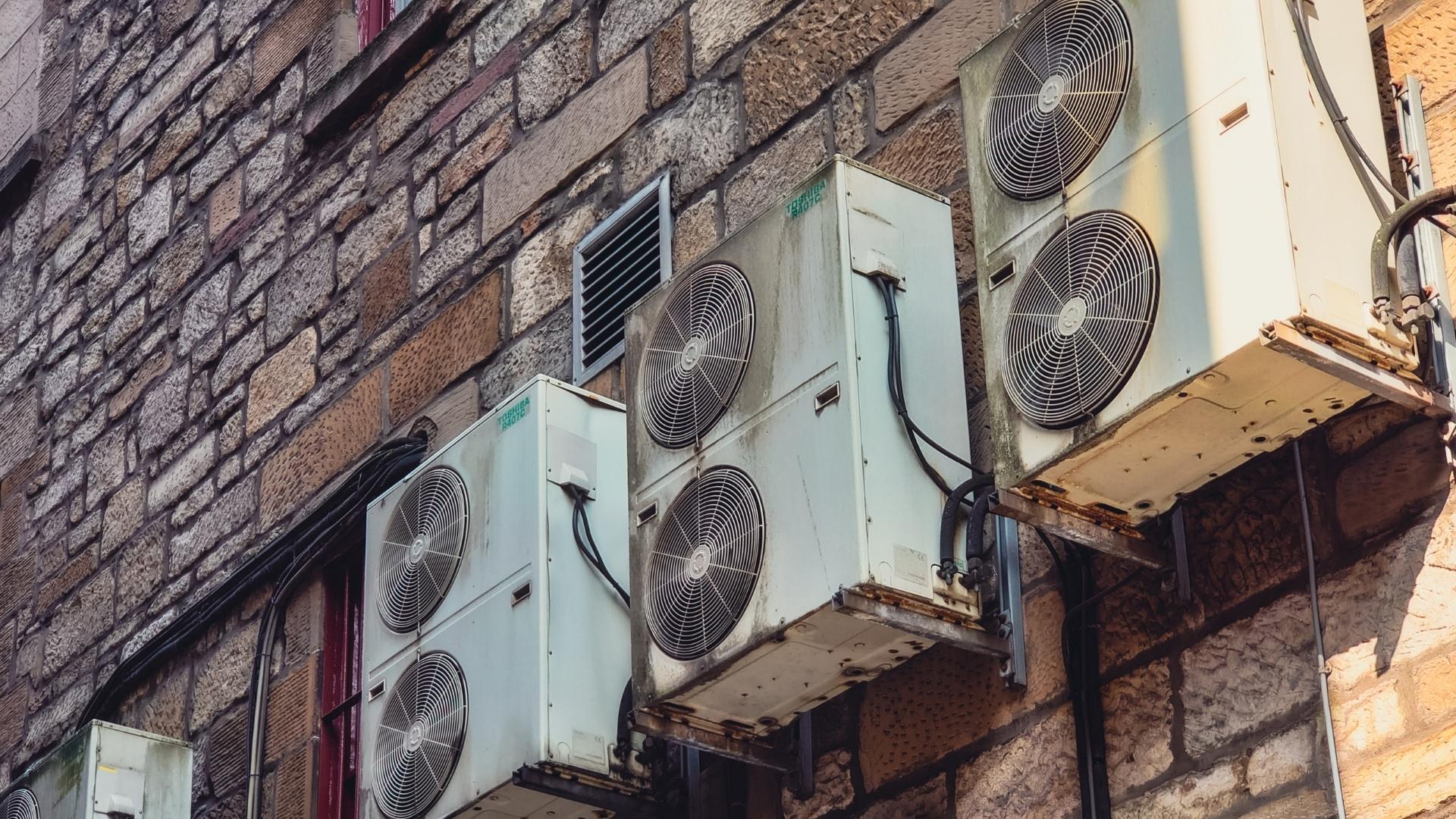
What to check on the roof and outdoor unit:
- Standing water around curbs or deteriorated economizer dampers
- Dirty condenser coils reducing heat rejection
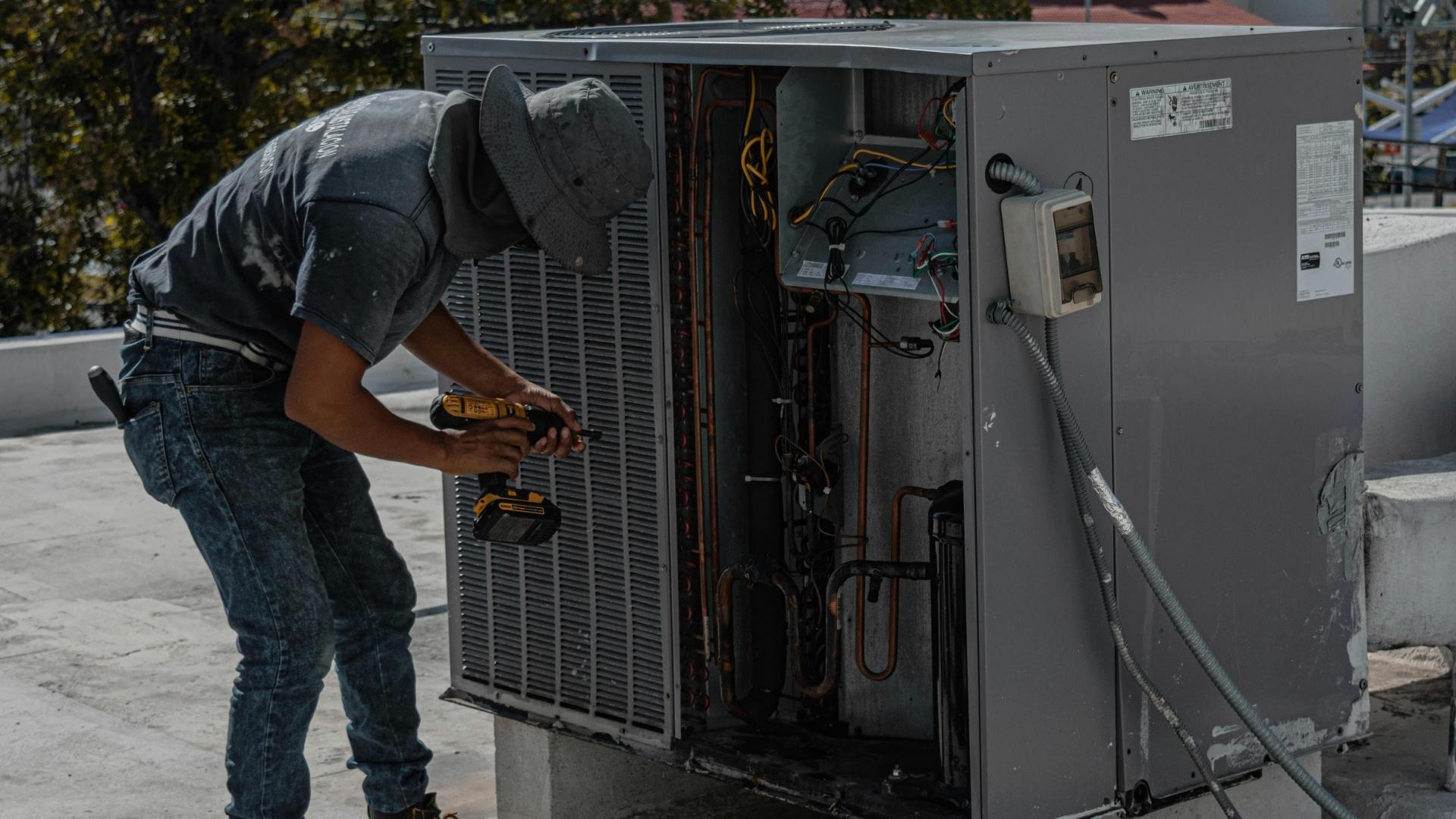
- Air conditioner panels left open or unsealed, exposing components to weather and debris
Odors and humidity as red flags:
Your HVAC system should regulate humidity levels effectively. When it doesn’t, increased humidity indicates your air conditioning system isn’t dehumidifying properly. High indoor humidity levels can indicate that HVAC systems are failing to dehumidify effectively, and high humidity can promote mold growth throughout the building. Humidity issues may signal low refrigerant or poor airflow through the indoor unit.
Foul odors may indicate mold or mildew growth inside ductwork or coils. A musty smell often results from clogged condensate drain lines. Burning smells can signal overheating components or electrical issues, and electrical odors suggest potential wiring issues in HVAC systems. Persistent bad smells indicate your HVAC system needs repairs – don’t mask them with air fresheners.
Poor indoor air quality is often linked to clogged filters or failing HVAC components. Constantly fogged windows or interior condensation in Georgia’s overly humid summers are a clear sign of wasted cooling energy. Frazier Service Co’s preventive maintenance visits include visual inspections that uncover these obvious but overlooked sources of energy waste.
Control Problems: When Schedules and Setpoints Don’t Match Reality
Even an efficient system will waste energy if building controls and schedules are wrong. Common control issues include:
- Systems running at full occupancy mode at night, on weekends, or during school breaks
- Competing thermostats and occupant overrides – a faulty thermostat or space heaters under desks fight the HVAC system, creating discomfort and energy waste
- Older standalone thermostats that lack scheduling, demand control ventilation, or remote monitoring capabilities
Smart thermostats and modern building automation systems play a vital role in maintaining comfort while lowering bills. DOE research shows that proper building controls can cut commercial energy consumption by roughly 29% on average. Frazier Service Co has helped Georgia school districts cut HVAC energy use by updating time-of-day schedules and integrating zone control through systems like Siemens Talon.
Maintenance History: Neglect, Frequent Repairs, and System Age
Poor maintenance is one of the most common and preventable causes of energy waste. Watch for these patterns:
- Increasing number of HVAC repairs year over year
- More emergency calls and repeated AC repairs on the same unit within a single cooling season
- Multiple repairs that cost more than what a new system would deliver in savings
Skipped filter changes, neglected coil cleaning, and worn belts force equipment to draw more energy for the same heating and air conditioning output. Replacing filters and cleaning coils on schedule keeps the system running smoothly and prevents further damage. Restricted airflow from dirty filters and dirty coils compounds into costly breakdowns and major problems.
Units over 15–20 years old are strong candidates for energy-saving replacement or retrofit. Use maintenance logs from 2022–2026 to identify equipment with high downtime and rising parts costs. Frazier Service Co’s preventive maintenance programs and remote monitoring help catch small performance drops before they become energy-wasting failures – delivering reliable service and cost effective results.
How Frazier Service Co Helps Georgia Businesses Stop Energy Waste
Frazier Service Co is a Georgia-based commercial HVAC and building automation specialist with more than 40 years focused on energy efficiency. Key services include:
- System performance assessments and energy benchmarking
- HVAC repair, design-build upgrades, and controls integration
- Remote monitoring and energy-management system installation
- Lighting upgrades as part of whole-building energy strategies
As Georgia’s sole Siemens Talon provider – with partnerships with Honeywell, Novar, and H I Solutions – Frazier delivers advanced building controls across education, healthcare, senior living, industrial, and office environments, serving clients like GCPS and Akins Ford.
Frazier offers 100% project financing so energy-saving upgrades can be funded through future utility and maintenance savings. If your facility is showing any of these warning signs, the cost of inaction only grows.
Contact Frazier Service Co to schedule an energy-focused HVAC evaluation and customized improvement plan for your Georgia facility.
FAQ: Commercial HVAC Energy Waste
How do I know if my commercial HVAC system is the main cause of my high energy bills?
Compare historical utility data by season and review building changes – hours, occupancy, equipment additions – to rule out non-HVAC causes. Installing temporary metering or using building automation trend logs can separate HVAC energy use from lighting and plug loads. Frazier Service Co can perform a targeted energy audit to confirm how much of your energy bills are driven by HVAC operation.
How often should a commercial HVAC system be serviced to maintain energy efficiency?
In Georgia’s climate, most commercial systems need at least quarterly regular maintenance, with more frequent filter changes in dusty or high-occupancy buildings. Critical facilities such as data centers, labs, and healthcare sites may require monthly inspections and continuous monitoring. Frazier customizes maintenance plans based on building type, equipment mix, and energy efficiency goals.
Can building automation really reduce energy waste in an existing facility?
Yes. Modern controls optimize schedules, reset temperatures, and stage equipment to match real-time loads without sacrificing comfort. Many Georgia buildings see 10–25% HVAC energy reductions after controls upgrades and recommissioning. Frazier Service Co specializes in retrofitting automation systems like Siemens Talon into existing buildings with minimal disruption.
When is it better to replace rather than keep repairing an inefficient unit?
Practical rules of thumb: frequent repairs within 12–18 months, major component failure on equipment over 15 years old, low refrigerant levels requiring repeated recharges, or very low efficiency ratings compared to current standards. Compare lifecycle costs – future repairs plus energy waste versus the installed cost of an energy efficient replacement. Frazier helps clients run these comparisons and offers financing so upgrades pay for themselves through lower bills.
What’s the first step if I suspect my building has HVAC-related energy waste?
Start with a walkthrough to document comfort complaints, hot and cold spots, blocked vents, and obvious equipment issues or unusual noises. Pull the last 12–24 months of energy bills to identify trends by season and operating schedule. Then contact Frazier Service Co to schedule a commercial HVAC and controls assessment tailored to your building’s size and use – before minor problems become costly breakdowns.